
Gathering Evidence and Building Predictive Models
Using emerging AI approaches to speed up data collection and generate predictive models for integration into safety assessments.
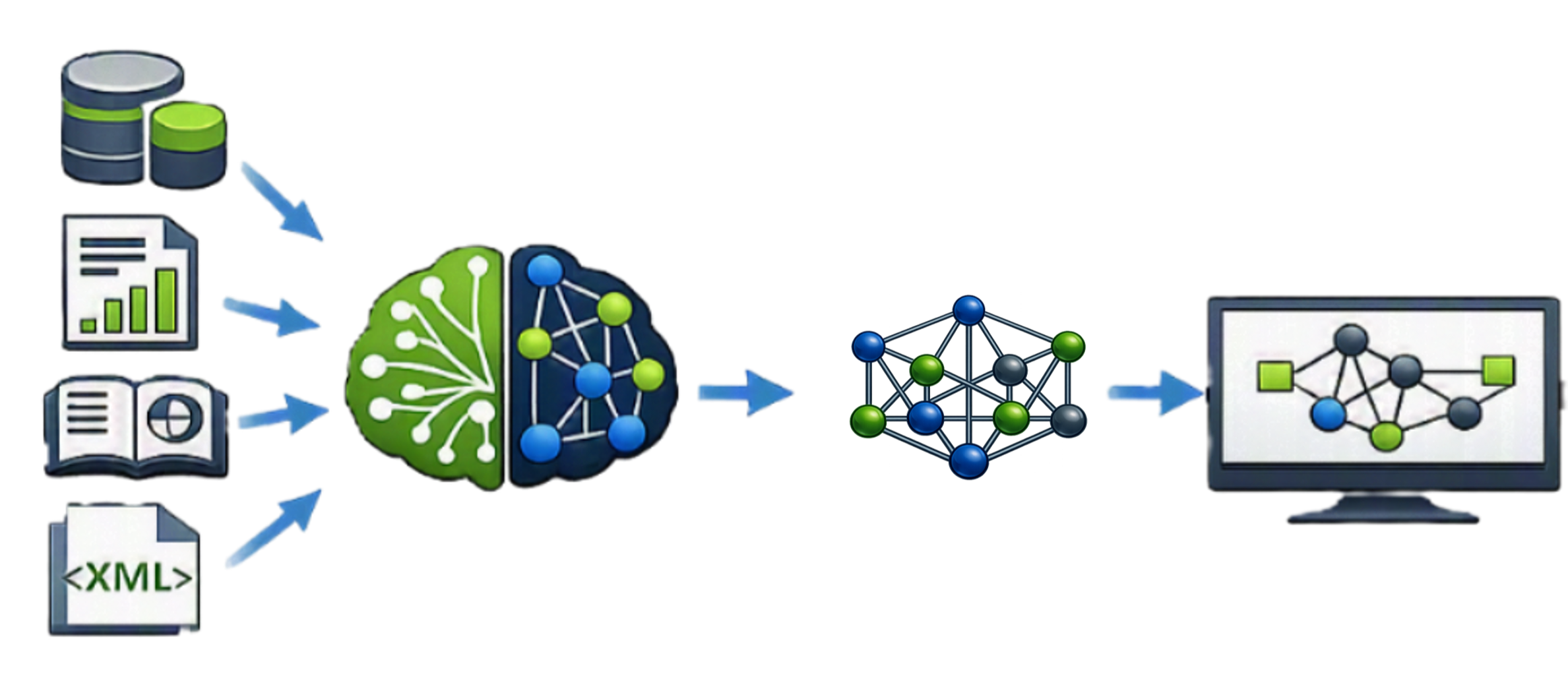
New approaches to safety assessment often demand large volumes of data — from transcriptomic profiles and protein binding assays to QSAR predictions and historical animal studies in unstructured formats. Gathering, cleaning, and integrating these diverse data types is both time-consuming and technically challenging.
At ToxComponents we believe AI-assisted workflows can transform this process, making evidence gathering faster and more rigorous without sacrificing quality.
We specialise in applying cutting-edge generative AI to data collection and in building predictive models using the latest machine learning techniques. Whether the resources already exist or need to be built from scratch, we can help.
Data Gathering
Finding and accessing relevant data from structured and unstructured sources is a persistent challenge. Critical evidence may be spread across disconnected databases, or locked in PDFs and paper documents — available but unusable in a structured workflow.
At ToxComponents we build generative AI-powered workflows that rapidly and comprehensively extract relevant data for your problem and target, maintaining scientific rigour while removing the manual burden.
Building Models
Predictive models are an increasingly important line of evidence in weight-of-evidence safety assessments. When generating, combining, and interpreting model predictions, it is essential to consider reliability, applicability domain, strengths, and limitations. If a model needs to be built for a given endpoint, following best practice is critical for both performance and interpretability.
At ToxComponents we are experts in predictive toxicology modelling. We understand that data quality underpins model quality — careful curation and training set selection are everything. Our expertise spans expert rule-based SAR through to deep neural networks and multi-component learning. We are also actively researching methods for assessing and communicating model outputs so that predictions from suites of models can be appropriately interpreted in a regulatory context.
References
Cayley A, Fowkes A, Williams RV. Important considerations for the validation of QSAR models for in vitro mutagenicity. Mutagenesis. 2018;34(1):25-32. doi: 10.1093/mutage/gey034.
Honma M et al. Improvement of quantitative structure–activity relationship (QSAR) tools for predicting Ames mutagenicity: outcomes of the Ames/QSAR International Challenge Project. Mutagenesis. 2018;34(1):3-16. doi: 10.1093/mutage/gey031.
Barber C et al. Evaluation of a statistics-based Ames mutagenicity QSAR model and interpretation of the results obtained. Regulatory Toxicology and Pharmacology. 2016;76:7-20. doi: 10.1016/j.yrtph.2015.12.006.